Vietnamese Spring Rolls

Spring rolls are a delightful way to enjoy Vietnamese food in its freshest form. Unlike fried versions that are heavier, these fresh spring rolls are light, colorful, and packed with crisp vegetables, herbs, and a touch of protein. They’re perfect as an appetizer, a snack, or even a light meal, and the best part is how versatile they are—you can fill them with whatever you like while keeping that refreshing crunch.
Making easy spring roll recipes at home might sound intimidating, but it’s actually simpler than you think. With a few ingredients and a bit of patience rolling them, you can create fresh spring rolls that look as good as they taste. The translucent rice paper wraps let the vibrant colors of the veggies shine through, making each bite as visually appealing as it is flavorful.
What makes these Vietnamese spring rolls so special is the combination of textures and flavors. The crisp lettuce, aromatic herbs, and tender noodles contrast beautifully with any protein you choose—shrimp, tofu, or even chicken. Then, paired with a tangy peanut or hoisin dipping sauce, each roll becomes a little explosion of flavor in your mouth.
For anyone who enjoys cooking at home, easy Vietnamese spring rolls are a fun project that doesn’t require hours in the kitchen. You can prepare the ingredients ahead of time, and then assembling the rolls becomes almost meditative. They’re a great way to bring a bit of Vietnam into your kitchen without a complicated process.
Why You’ll Love It
- Light and Refreshing: These rolls feel fresh with every bite, making them a perfect choice when you want something satisfying but not heavy. They’re a crisp, garden-fresh escape on a plate.
- Customizable to Your Taste: Whether you prefer shrimp, tofu, or chicken, you can fill these rolls any way you like. Add your favorite herbs and veggies, and each roll becomes uniquely yours.
- Fun to Make: Rolling the ingredients in rice paper is surprisingly relaxing and even a little addictive. It’s a hands-on recipe that’s great for cooking with friends or family.
- Perfect for Any Occasion: Serve them at parties, family dinners, or even just a weeknight meal. Easy spring roll recipes like this always impress without requiring hours of prep.
- Healthy and Wholesome: Packed with fresh vegetables, herbs, and protein, these Vietnamese spring rolls are as nourishing as they are delicious—perfect for anyone looking for a lighter, guilt-free option.
Ingredient List
For the Rolls:
- 8 rice paper wrappers
- 100g rice vermicelli noodles
- 200g cooked shrimp, sliced in half lengthwise (or tofu/chicken)
- 1 cup shredded lettuce
- 1/2 cup fresh mint leaves
- 1/2 cup fresh cilantro leaves
- 1/2 cup fresh Thai basil leaves
- 1 medium carrot, julienned
- 1 cucumber, julienned
- 1/4 cup bean sprouts
For the Dipping Sauce:
- 3 tablespoons hoisin sauce
- 2 tablespoons peanut butter
- 1 tablespoon soy sauce
- 1 teaspoon lime juice
- 1 clove garlic, minced
- 2–3 tablespoons water (to thin if needed)
- Crushed peanuts for garnish (optional)
Ingredient Notes
- I always use rice paper from Banh Trang—it’s thinner and rolls more easily without tearing.
- Don’t skip the fresh herbs! Mint, cilantro, and Thai basil are what make this a true Vietnamese food experience.
- For a richer flavor, I love using natural peanut butter in the dipping sauce—it blends perfectly with hoisin.
- Make sure your noodles are cooled before rolling; hot noodles make the rice paper sticky and tricky to handle.
- Shrimp or tofu? Either works beautifully—shrimp gives a classic taste, but tofu is just as satisfying for a vegetarian version.
Kitchen Equipment Needed
- Large bowl: For soaking rice vermicelli noodles. I use a glass one so I can see when they’re just right.
- Medium plate or shallow dish: To dip the rice paper in warm water. A flat dish works best for easy rolling.
- Cutting board: For chopping all the veggies and herbs. I love my bamboo board—it’s gentle on knives.
- Sharp knife: Essential for slicing shrimp, tofu, and vegetables cleanly. A chef’s knife makes life easier.
- Small bowl: To mix the dipping sauce. I use a little ceramic bowl—it’s perfect for a single serving.
- Tongs or chopsticks: Handy for handling slippery noodles or rolling the delicate rice paper.
Instructions
1. Prepare the Noodles
- Soak the rice vermicelli: Place the noodles in a large bowl and cover with warm water. Let them soak for about 8–10 minutes until soft but still slightly firm.
- Drain and rinse: Drain the noodles and rinse under cold water to stop them from cooking further.
- Pro tip: Toss the noodles with a tiny drizzle of sesame oil to prevent them from sticking together while you prep the other ingredients.
2. Prep the Vegetables and Herbs
- Wash and dry: Rinse all your lettuce, mint, cilantro, and basil leaves. Pat them dry with a clean towel or paper towel—wet leaves make the rolls soggy.
- Julienne the veggies: Slice the carrot and cucumber into thin matchstick pieces. Bean sprouts should be rinsed and patted dry.
- Arrange for easy access: Lay all ingredients on a large plate or tray so everything is ready at arm’s reach.
3. Cook and Slice Protein
- Shrimp: Boil or steam until pink and opaque, about 2–3 minutes. Slice in half lengthwise.
- Tofu: Pan-fry until golden on all sides for extra flavor.
- Chicken (optional): Use pre-cooked shredded chicken for convenience.
- Pro tip: Let the protein cool slightly before rolling; hot ingredients can make the rice paper tear.
4. Prepare the Rice Paper
- Warm water bath: Fill a shallow dish with warm water (not too hot).
- Dip each wrapper: Submerge a rice paper sheet for 5–8 seconds until it softens but is still slightly firm—it will continue to soften as you roll.
- Lay on a flat surface: Place it on a clean cutting board or plate for easy filling.
- Pro tip: Work one at a time—don’t stack wet rice papers or they’ll stick together.
5. Assemble the Rolls
- Layer the fillings: On the bottom third of the rice paper, add a small handful of noodles, a few shrimp slices, a few carrot and cucumber sticks, bean sprouts, and herbs.
- Fold and roll: Fold the sides inward, then roll tightly from the bottom. Aim for a snug roll without tearing the paper.
- Pro tip: Don’t overfill—the rolls should be easy to bite without bursting.
6. Make the Dipping Sauce
- Mix ingredients: In a small bowl, whisk together hoisin sauce, peanut butter, soy sauce, lime juice, and garlic until smooth. Add water to reach your desired consistency.
- Optional garnish: Sprinkle crushed peanuts on top for texture and flavor.
- Pro tip: Whisk continuously to prevent lumps and make a creamy, smooth sauce.
7. Serve and Enjoy
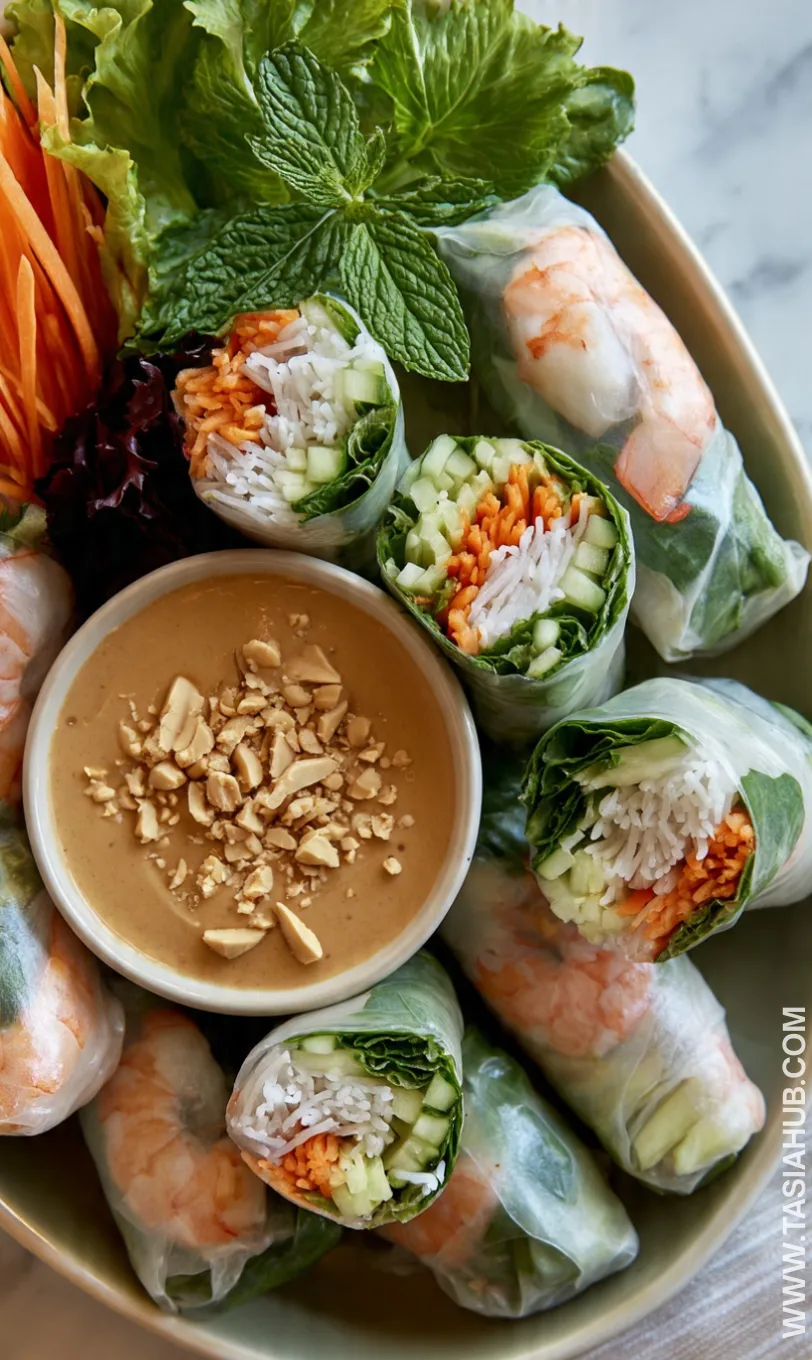
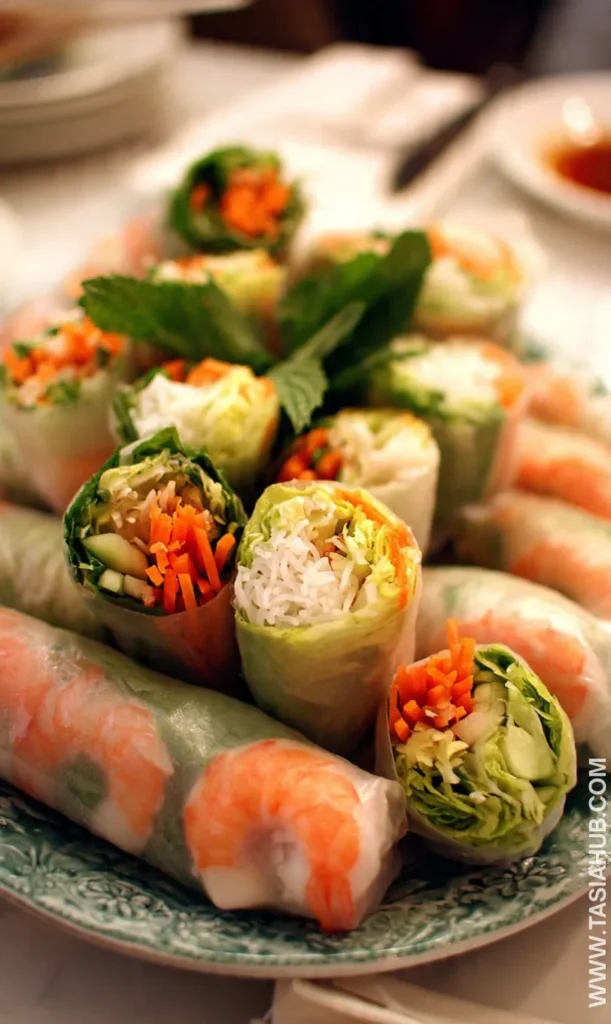
- Plate the rolls: Arrange them on a platter, overlapping slightly for a colorful presentation.
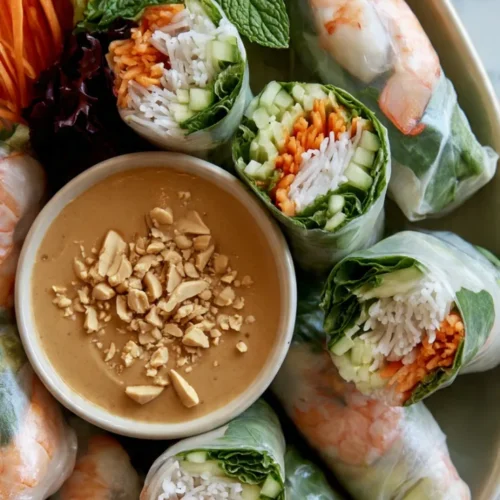
- Serve with sauce: Place the dipping sauce in the center or on the side for easy access.
- Tip: Fresh spring rolls taste best the same day, but you can cover them with a damp towel in the fridge for a few hours if needed.
Tips and Tricks for Success
- Keep your work surface clean and dry: Wet surfaces make rice paper sticky and tricky to roll.
- Don’t over-soak the rice paper: A few seconds in warm water is enough—over-soaking makes it tear.
- Roll gently but firmly: Tuck the sides in first, then roll tightly to keep fillings from falling out.
- Prep everything first: Having noodles, veggies, herbs, and protein ready makes assembly smooth and stress-free.
- Serve immediately for the freshest taste: Fresh spring rolls are crispest when eaten right after rolling.
- Use a damp towel for storage: If you need to make them ahead, place a damp kitchen towel over the rolls to keep them from drying out.
Ingredient Substitutions and Variations
- Protein: Swap shrimp for tofu, chicken, or even thinly sliced beef. All work beautifully!
- Noodles: Rice vermicelli can be replaced with glass noodles or soba noodles for a different texture.
- Herbs: Don’t have Thai basil? Regular basil or extra mint works just as well.
- Veggies: Add bell peppers, avocado slices, or cabbage for extra crunch and color.
- Dipping Sauce: Try a simple soy-lime sauce or a sweet chili sauce if you prefer something lighter than peanut-hoisin.
- Wraps: For a gluten-free alternative, stick to traditional rice paper—but whole-grain rice papers are available for a slightly nuttier flavor.
Serving Suggestions
- I love serving these fresh spring rolls with a small bowl of peanut dipping sauce and an ice-cold jasmine tea—it feels like a mini Vietnamese feast at home!
- Pair them with a simple cucumber salad tossed in rice vinegar and sesame seeds for a refreshing, crunchy side.
- Serve alongside a bowl of pho or a light noodle soup to make a satisfying lunch or dinner combo.
- For a party platter, arrange rolls on a large board with multiple dipping sauces—hoisin, sweet chili, and peanut—for variety.
- Add a handful of crushed peanuts or sesame seeds on top right before serving to give a little extra crunch and flavor.
Storage and Reheating Instructions
- Short-term storage: Wrap rolls individually in plastic wrap or place in an airtight container. Keep a damp paper towel over them to prevent drying out.
- Refrigeration: Store in the fridge for up to 1 day. Best eaten fresh for the crispest texture.
- Freezing: Not recommended, as rice paper becomes sticky and loses texture when thawed.
- Serving after storage: Let refrigerated rolls sit at room temperature for 10–15 minutes before serving—they taste best slightly chilled, not ice-cold.
- Dipping sauce storage: Keep the sauce in a separate container in the fridge for up to a week. Stir before serving if it thickens.
Frequently Asked Questions
Can I make Vietnamese spring rolls ahead of time?
Yes! You can prep the ingredients ahead and even roll them a few hours before serving. Just cover them with a damp towel and store in the fridge to keep them fresh.
Can I use cooked chicken or tofu instead of shrimp?
Absolutely! Any protein you like works. Tofu or shredded chicken are great vegetarian-friendly options that taste just as delicious.
How do I prevent the rice paper from tearing?
Don’t soak the rice paper too long—just a few seconds in warm water is enough. Roll gently but firmly, and tuck in the sides first for easy assembly.
Can I freeze fresh spring rolls?
It’s not recommended. Freezing makes the rice paper sticky and chewy, which affects the texture. Fresh rolls are best eaten the same day.
What’s the best dipping sauce for these rolls?
A peanut-hoisin sauce is classic and flavorful, but sweet chili or a simple soy-lime mix works wonderfully too. Serve it on the side so everyone can dip!
Are these rolls suitable for vegetarians?
Yes! Simply swap the shrimp for tofu or more veggies, and you’ll have a fresh, easy Vietnamese spring roll that’s completely vegetarian-friendly.
Did you try this recipe? Let me know in the comments how your rolls turned out—I’d love to hear your favorite fillings and dipping sauce combos!
Vietnamese Spring Rolls
Equipment
- Large bowl
- Medium plate or shallow dish
- Cutting board
- Sharp Knife
- Small bowl
- Tongs or chopsticks
Ingredients
For the Rolls:
- 8 rice paper wrappers
- 100 g rice vermicelli noodles
- 200 g cooked shrimp sliced in half lengthwise (or tofu/chicken)
- 1 cup shredded lettuce
- 1/2 cup fresh mint leaves
- 1/2 cup fresh cilantro leaves
- 1/2 cup fresh Thai basil leaves
- 1 medium carrot julienned
- 1 cucumber julienned
- 1/4 cup bean sprouts
For the Dipping Sauce:
- 3 tablespoons hoisin sauce
- 2 tablespoons peanut butter
- 1 tablespoon soy sauce
- 1 teaspoon lime juice
- 1 clove garlic minced
- 2 –3 tablespoons water to thin if needed
- Crushed peanuts for garnish optional
Instructions
Prepare the Noodles
- Soak the rice vermicelli: Place the noodles in a large bowl and cover with warm water. Let them soak for about 8–10 minutes until soft but still slightly firm.
- Drain and rinse: Drain the noodles and rinse under cold water to stop them from cooking further.
- Pro tip: Toss the noodles with a tiny drizzle of sesame oil to prevent them from sticking together while you prep the other ingredients.
Prep the Vegetables and Herbs
- Wash and dry: Rinse all your lettuce, mint, cilantro, and basil leaves. Pat them dry with a clean towel or paper towel—wet leaves make the rolls soggy.
- Julienne the veggies: Slice the carrot and cucumber into thin matchstick pieces. Bean sprouts should be rinsed and patted dry.
- Arrange for easy access: Lay all ingredients on a large plate or tray so everything is ready at arm’s reach.
Cook and Slice Protein
- Shrimp: Boil or steam until pink and opaque, about 2–3 minutes. Slice in half lengthwise.
- Tofu: Pan-fry until golden on all sides for extra flavor.
- Chicken (optional): Use pre-cooked shredded chicken for convenience.
- Pro tip: Let the protein cool slightly before rolling; hot ingredients can make the rice paper tear.
Prepare the Rice Paper
- Warm water bath: Fill a shallow dish with warm water (not too hot).
- Dip each wrapper: Submerge a rice paper sheet for 5–8 seconds until it softens but is still slightly firm—it will continue to soften as you roll.
- Lay on a flat surface: Place it on a clean cutting board or plate for easy filling.
- Pro tip: Work one at a time—don’t stack wet rice papers or they’ll stick together.
Assemble the Rolls
- Layer the fillings: On the bottom third of the rice paper, add a small handful of noodles, a few shrimp slices, a few carrot and cucumber sticks, bean sprouts, and herbs.
- Fold and roll: Fold the sides inward, then roll tightly from the bottom. Aim for a snug roll without tearing the paper.
- Pro tip: Don’t overfill—the rolls should be easy to bite without bursting.
Make the Dipping Sauce
- Mix ingredients: In a small bowl, whisk together hoisin sauce, peanut butter, soy sauce, lime juice, and garlic until smooth. Add water to reach your desired consistency.
- Optional garnish: Sprinkle crushed peanuts on top for texture and flavor.
- Pro tip: Whisk continuously to prevent lumps and make a creamy, smooth sauce.
Serve and Enjoy
- Plate the rolls: Arrange them on a platter, overlapping slightly for a colorful presentation.
- Serve with sauce: Place the dipping sauce in the center or on the side for easy access.
- Tip: Fresh spring rolls taste best the same day, but you can cover them with a damp towel in the fridge for a few hours if needed.
Notes
Nutritional Value (Approximate, per serving)
- Calories: 220–260 kcal
- Protein: 14–18g
- Carbohydrates: 30–35g
- Fat: 7–9g
- Fiber: 4–6g
- Sugar: 4–6g
- Sodium: Moderate