Veggie Spring Rolls
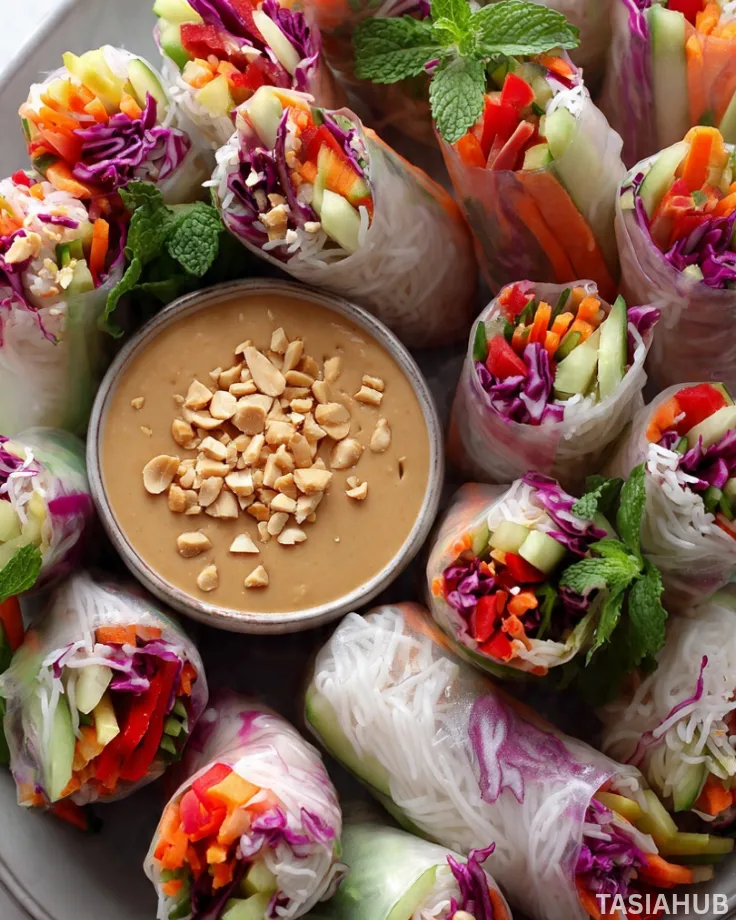
Spring rolls have a way of turning simple vegetables into something exciting and fresh. They’re crisp, colorful, and full of vibrant flavors that make every bite feel light yet satisfying. Unlike fried versions that can feel heavy, healthy spring rolls are all about keeping the vegetables at the center, wrapped delicately in rice paper that gives a gentle chewiness and a subtle neutral taste to let the filling shine.
Making your own vegetable spring roll at home is easier than most people think. With just a few fresh ingredients, a little prep, and some rice paper, you can create a dish that’s both visually appealing and nutritionally rewarding. I love how versatile they are—you can mix and match your favorite veggies, add herbs for an aromatic touch, or include noodles or tofu for extra texture and protein.
Homemade veggie spring rolls also offer a sense of accomplishment. There’s something satisfying about rolling each one carefully, watching the colorful vegetables peek through the translucent wrappers. They’re perfect for a light lunch, an appetizer for a dinner party, or even a snack to share with friends. And the best part? They’re completely customizable to suit your taste or what’s in season.
Vegetarian spring rolls are not just for those following a plant-based diet—they’re a crowd-pleaser for anyone who loves fresh, crisp flavors and a little crunch in every bite. Paired with a tangy dipping sauce, they turn simple vegetables into a dish that feels special. Whether you’re rolling them up for yourself, your family, or guests, these homemade veggie spring rolls are bound to become a regular on your menu.
Why You’ll Love It
- Fresh, crisp, and colorful every time – Each bite of these spring rolls is a burst of texture and color. The combination of crunchy vegetables and tender rice paper makes them feel light, yet satisfying.
- Totally customizable – You can switch up the veggies, add herbs, noodles, or even tofu to match your taste. Every batch can be a little different, so it never gets boring.
- Healthy without sacrificing flavor – Unlike fried snacks, these rolls are naturally low in calories and packed with nutrients, making them a perfect guilt-free treat.
- Fun to make – Rolling these yourself is almost like a mini craft project. It’s a fun way to get kids or friends involved in the kitchen while creating something beautiful.
- Perfect for any occasion – Whether it’s a light lunch, a picnic, or an appetizer for a dinner party, these veggie spring rolls fit right in. They’re impressive, yet effortless to serve.
Ingredient List
For the Veggie Filling:
- 1 cup shredded carrots
- 1 cup thinly sliced cucumber
- 1 cup red bell pepper, julienned
- 1 cup purple cabbage, shredded
- ½ cup fresh mint leaves
- ½ cup fresh cilantro leaves
- ½ cup cooked rice vermicelli noodles (optional, for extra texture)
For the Wrappers:
- 10–12 rice paper sheets
For the Dipping Sauce:
- ¼ cup hoisin sauce
- 2 tablespoons peanut butter
- 1 tablespoon soy sauce
- 1 teaspoon sesame oil
- 1–2 tablespoons warm water (to thin sauce if needed)
- Crushed peanuts for garnish (optional)
Ingredient Notes
- I always use fresh herbs like mint and cilantro—it adds a brightness that makes these veggie spring rolls pop.
- Don’t skip the red bell pepper! It’s sweet, colorful, and gives the perfect crunch.
- Rice vermicelli noodles are optional, but I love adding them—they make the rolls feel more filling without weighing them down.
- For the dipping sauce, I personally go for creamy peanut butter over plain—trust me, it makes a big difference!
- Always have your rice paper sheets nearby and ready to soften one at a time—they can stick if you try to prep them all at once.
Kitchen Equipment Needed
- Cutting board – For slicing and prepping all your colorful veggies. I love using a large wooden one; it makes everything easier to handle.
- Sharp knife – Essential for thin, even cuts so your rolls are neat and easy to roll.
- Mixing bowls – To toss veggies and herbs together before assembling. A medium glass bowl works perfectly.
- Small saucepan – If you’re cooking rice vermicelli noodles. I use a non-stick one to avoid sticking.
- Large shallow dish or plate – To soften rice paper sheets. Wide and flat is best so sheets don’t fold awkwardly.
- Kitchen towel or clean dishcloth – To cover softened rice paper and keep them pliable while you roll.
- Serving plate – For arranging your finished veggie spring rolls beautifully.
Instructions
Step 1: Prep Your Veggies
- Wash and dry all your fresh vegetables and herbs. This keeps the rolls crisp and prevents sogginess.
- Shred or julienne the carrots, cucumber, bell pepper, and cabbage into thin, uniform pieces. Thin cuts make rolling much easier.
- Chop your mint and cilantro leaves roughly, keeping them fragrant and fresh.
- Optional: Cook the rice vermicelli noodles according to package instructions, then rinse under cold water and drain well to avoid stickiness.
Pro Tip: Keep everything in separate bowls—it makes assembly smoother and more organized.
Step 2: Soften the Rice Paper
- Fill a large shallow dish or plate with warm water.
- Submerge one rice paper sheet at a time for about 10–15 seconds, just until it becomes soft and pliable.
- Lay it flat on a clean kitchen towel or cutting board, ready to fill.
Pro Tip: Don’t soak too long, or it will tear when you roll. Work one sheet at a time for best results.
Step 3: Assemble the Filling
- Place a small handful of each vegetable in the center of the softened rice paper.
- Add a few pieces of fresh herbs and a small portion of noodles if using.
- Keep the filling about 2–3 inches wide in the center so it’s easy to roll without bursting.
Pro Tip: Less is more! Overstuffing makes rolling tricky and can tear the wrapper.
Step 4: Roll the Spring Rolls
- Fold the sides of the rice paper over the filling first.
- Roll from the bottom up, keeping the filling snug as you go.
- Continue rolling until you reach the top, tucking gently as you go to create a tight, neat roll.
Pro Tip: Keep a damp towel over finished rolls to prevent them from drying out while you finish the rest.
Step 5: Make the Dipping Sauce
- In a small bowl, combine hoisin sauce, peanut butter, soy sauce, and sesame oil.
- Whisk together until smooth, adding warm water a little at a time to reach your desired consistency.
- Sprinkle crushed peanuts on top if you like a crunchy texture.
Pro Tip: Whisk continuously to prevent lumps and get a creamy, smooth sauce that clings perfectly to the rolls.
Step 6: Serve and Enjoy
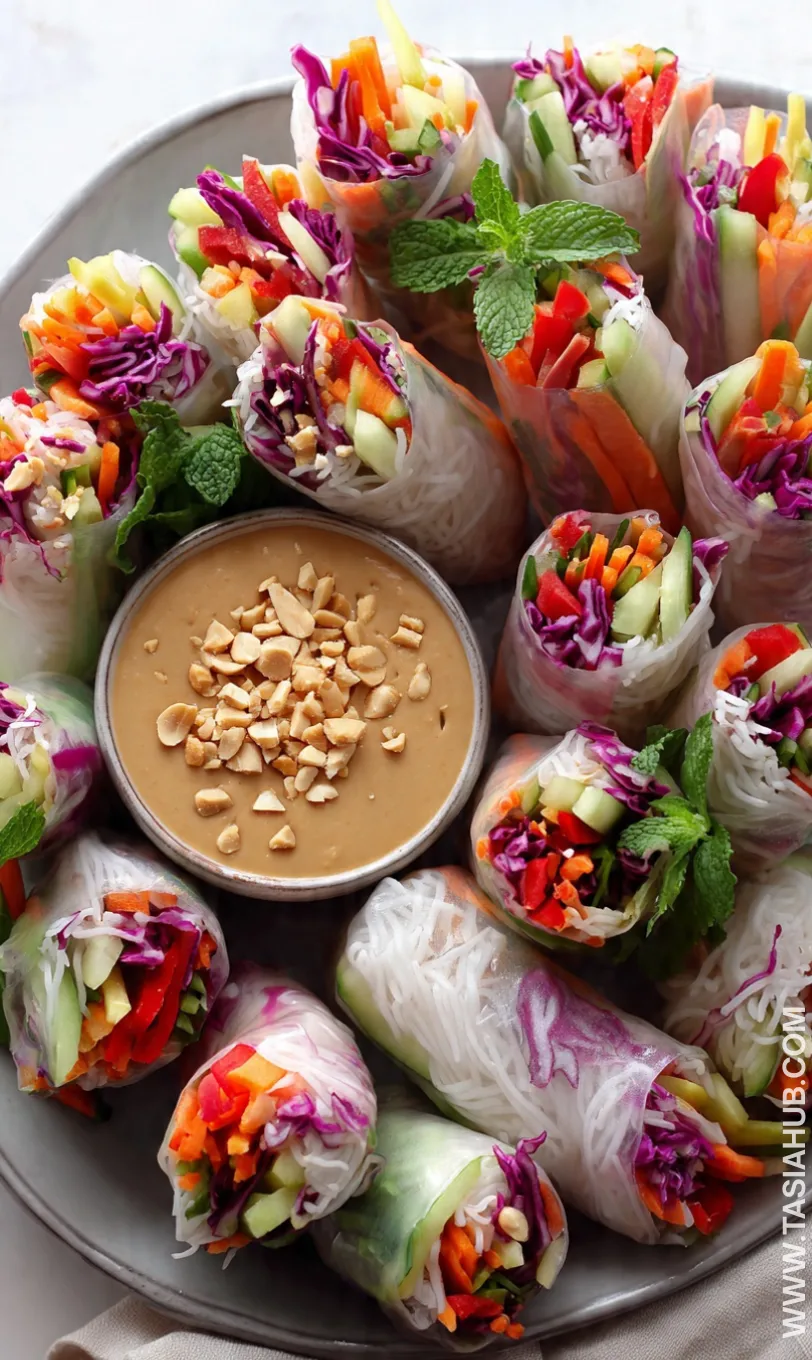
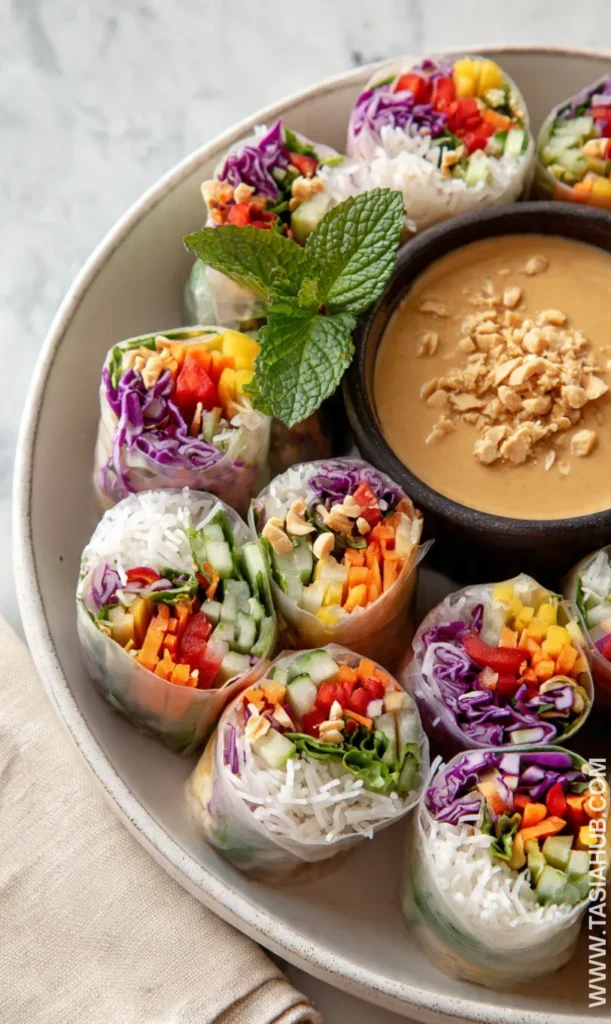
- Arrange your veggie spring rolls on a serving plate.
- Serve immediately with your peanut dipping sauce on the side.
- Enjoy as a light lunch, snack, or appetizer—you can even prep a few rolls in advance for a fresh, ready-to-go treat.
Tips and Tricks for Success
- Keep your workspace organized – Have bowls for each veggie and a damp towel for softened rice paper to make rolling smooth and stress-free.
- Roll gently but snug – Don’t force the rice paper; keep the filling snug to avoid tearing.
- Use fresh herbs – Mint and cilantro add a burst of flavor that really elevates the rolls.
- Serve immediately – Rice paper can dry out quickly, so plate and serve as soon as possible.
- Practice makes perfect – Your first few rolls might not look perfect—don’t worry! They’ll still taste amazing.
- Dampen rice paper lightly – If it starts to dry while rolling, quickly dip it in water to keep it pliable.
Ingredient Substitutions and Variations
- Vegetables: Swap in zucchini, avocado, or spinach depending on what you have on hand.
- Herbs: Try basil or parsley instead of mint and cilantro for a different flavor profile.
- Protein add-ins: Add tofu, tempeh, or cooked shrimp to make them more filling.
- Noodles: Use soba noodles, glass noodles, or skip them entirely for a lighter version.
- Dipping sauce: Try a spicy sriracha-lime sauce or a simple soy-ginger mix if peanut butter isn’t your favorite.
- Rice paper alternatives: For a gluten-free option, stick with standard rice paper; for a fun twist, you can lightly pan-fry them for a crispier version.
Serving Suggestions
- I love serving these veggie spring rolls with a small bowl of peanut dipping sauce and a side of crunchy carrot sticks—it makes a light, colorful lunch.
- Pair them with a fresh cucumber salad and a splash of lime for a refreshing appetizer at dinner parties.
- Serve alongside a bowl of miso soup or light vegetable broth for a cozy, balanced meal.
- Add a few rolls to a picnic basket with fresh fruit and iced tea—it’s a fun, portable lunch.
- For a snack platter, arrange them with other finger foods like edamame, roasted nuts, and sliced bell peppers for a vibrant, healthy spread.
Storage and Reheating Instructions
- Refrigerate immediately – Store leftover rolls in an airtight container with a damp paper towel to keep the rice paper from drying out.
- Best eaten same day – For the freshest taste and texture, consume within 24 hours.
- No reheating needed – These are served cold or at room temperature; reheating isn’t recommended as it softens the rice paper.
- Keep sauce separate – Store dipping sauce in a small jar or container to avoid soggy rolls.
- Freezing not advised – Rice paper becomes brittle and the texture changes when frozen, so stick to fresh prep.
Frequently Asked Questions
Can I make these spring rolls ahead of time?
Yes! You can prep the veggies and noodles ahead, but I recommend assembling the rolls just before serving to keep the rice paper soft and fresh.
What can I use instead of rice vermicelli noodles?
You can skip them entirely or use soba noodles, glass noodles, or even spiralized zucchini for a lighter version.
Can I freeze veggie spring rolls?
Freezing isn’t ideal—rice paper becomes brittle and loses its texture. It’s best to enjoy these fresh or store in the fridge for up to 24 hours.
How do I prevent the rice paper from sticking?
Always soften one sheet at a time and place it on a damp towel or plate. Cover finished rolls with a damp cloth to keep them pliable.
Can I add protein to make them more filling?
Absolutely! Tofu, tempeh, or cooked shrimp are great additions that pair well with the fresh veggies.
What’s the best dipping sauce for these rolls?
I love a creamy peanut sauce, but a soy-ginger or spicy sriracha-lime sauce works beautifully too. Keep the sauce separate until ready to serve to avoid soggy rolls.
Did you try this recipe? Let me know in the comments how it turned out! I’d love to hear your favorite veggie combinations and any creative twists you added.
Veggie Spring Rolls
Equipment
- Cutting board
- Sharp Knife
- Mixing Bowls
- Small saucepan
- Large shallow dish or plate
- Kitchen towel or clean dishcloth
- Serving Plate
Ingredients
For the Veggie Filling:
- 1 cup shredded carrots
- 1 cup thinly sliced cucumber
- 1 cup red bell pepper julienned
- 1 cup purple cabbage shredded
- ½ cup fresh mint leaves
- ½ cup fresh cilantro leaves
- ½ cup cooked rice vermicelli noodles optional, for extra texture
For the Wrappers:
- 10 –12 rice paper sheets
For the Dipping Sauce:
- ¼ cup hoisin sauce
- 2 tablespoons peanut butter
- 1 tablespoon soy sauce
- 1 teaspoon sesame oil
- 1 –2 tablespoons warm water to thin sauce if needed
- Crushed peanuts for garnish optional
Instructions
Step 1: Prep Your Veggies
- Wash and dry all your fresh vegetables and herbs. This keeps the rolls crisp and prevents sogginess.
- Shred or julienne the carrots, cucumber, bell pepper, and cabbage into thin, uniform pieces. Thin cuts make rolling much easier.
- Chop your mint and cilantro leaves roughly, keeping them fragrant and fresh.
- Optional: Cook the rice vermicelli noodles according to package instructions, then rinse under cold water and drain well to avoid stickiness.
- Pro Tip: Keep everything in separate bowls—it makes assembly smoother and more organized.
Step 2: Soften the Rice Paper
- Fill a large shallow dish or plate with warm water.
- Submerge one rice paper sheet at a time for about 10–15 seconds, just until it becomes soft and pliable.
- Lay it flat on a clean kitchen towel or cutting board, ready to fill.
- Pro Tip: Don’t soak too long, or it will tear when you roll. Work one sheet at a time for best results.
Step 3: Assemble the Filling
- Place a small handful of each vegetable in the center of the softened rice paper.
- Add a few pieces of fresh herbs and a small portion of noodles if using.
- Keep the filling about 2–3 inches wide in the center so it’s easy to roll without bursting.
- Pro Tip: Less is more! Overstuffing makes rolling tricky and can tear the wrapper.
Step 4: Roll the Spring Rolls
- Fold the sides of the rice paper over the filling first.
- Roll from the bottom up, keeping the filling snug as you go.
- Continue rolling until you reach the top, tucking gently as you go to create a tight, neat roll.
- Pro Tip: Keep a damp towel over finished rolls to prevent them from drying out while you finish the rest.
Step 5: Make the Dipping Sauce
- In a small bowl, combine hoisin sauce, peanut butter, soy sauce, and sesame oil.
- Whisk together until smooth, adding warm water a little at a time to reach your desired consistency.
- Sprinkle crushed peanuts on top if you like a crunchy texture.
- Pro Tip: Whisk continuously to prevent lumps and get a creamy, smooth sauce that clings perfectly to the rolls.
Step 6: Serve and Enjoy
- Arrange your veggie spring rolls on a serving plate.
- Serve immediately with your peanut dipping sauce on the side.
- Enjoy as a light lunch, snack, or appetizer—you can even prep a few rolls in advance for a fresh, ready-to-go treat.
Notes
Nutritional Value (Per Serving – Approximate)
- Calories: 180–220 kcal
- Carbohydrates: 28–32 g
- Protein: 6–8 g
- Fat: 6–9 g
- Fiber: 5–7 g
- Sugar: 4–6 g
- Sodium: Moderate