Spring Vegetable Pasta
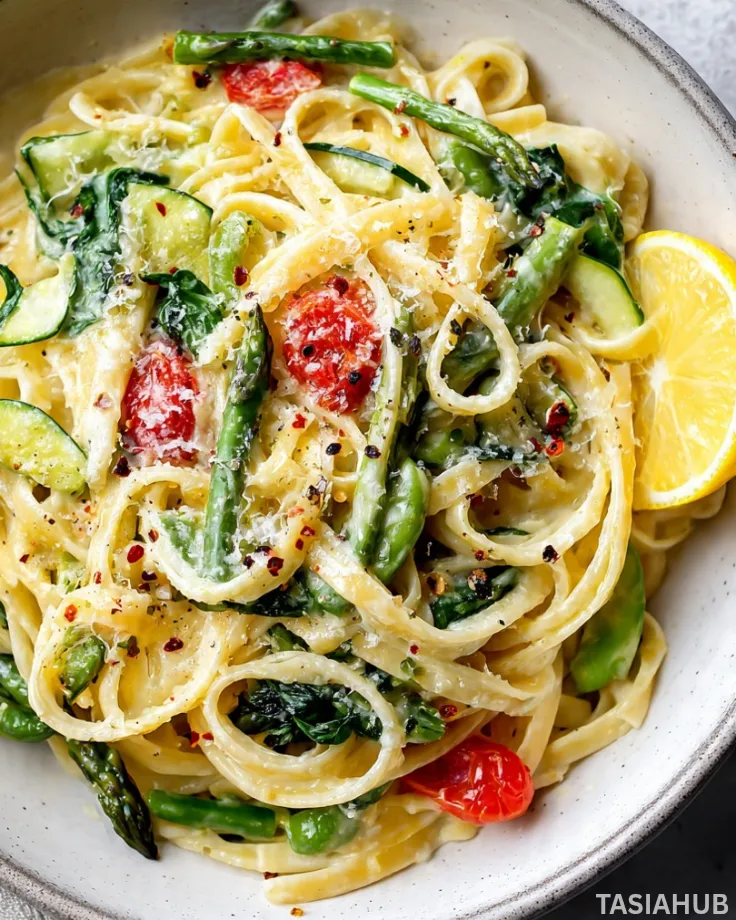
Spring has a way of inspiring lighter, fresher meals, and this spring vegetable pasta is the perfect example. Bright, crisp vegetables meet tender pasta in a creamy sauce that somehow feels indulgent without weighing you down. It’s one of those dishes that makes the most of seasonal produce, celebrating the flavors of spring in every bite.
I love this pasta and vegetable recipe because it’s flexible—you can swap in whatever fresh veggies you have on hand, from asparagus to peas to tender baby spinach. The creamy sauce binds everything together beautifully, but it’s not overly rich, keeping the dish light enough for a weeknight dinner or a casual weekend lunch.
What I enjoy most about this spring pasta recipe is how quickly it comes together. With just a handful of ingredients and about 30 minutes, you have a meal that feels both thoughtful and effortless. It’s ideal for those evenings when you want a satisfying dish but don’t want to spend hours in the kitchen.
This recipe fits perfectly into the realm of simple light meals for dinner. It’s hearty enough to feel filling yet fresh enough to reflect the season. Pair it with a crisp salad or a slice of crusty bread, and you have a complete spring time meal that’s sure to become a regular in your rotation.
Why You’ll Love It
- Fresh, seasonal flavors – Every bite highlights spring’s best vegetables, from tender asparagus to sweet peas, giving you a light, vibrant dish that feels like sunshine on a plate.
- Quick and effortless – This spring pasta recipe comes together in about 30 minutes, making it perfect for busy weeknights when you want something wholesome without the fuss.
- Versatile for any diet – Whether you want a vegetarian meal or a pasta and vegetable recipe that can easily accommodate protein, it adapts beautifully to your preferences.
- Creamy without being heavy – The sauce is silky and comforting, so you get that indulgent feel of creamy pasta with spring vegetables without feeling weighed down afterward.
- Perfect for entertaining or solo dinners – Elegant enough to serve to guests but simple enough to enjoy as a casual dinner, it’s a recipe that fits any occasion.
Ingredient List
For the Pasta:
- 12 oz (340 g) fettuccine or spaghetti
- 1 tsp salt, for the pasta water
For the Spring Vegetables:
- 1 cup asparagus, trimmed and cut into 2-inch pieces
- 1 cup sugar snap peas, trimmed
- 1 cup baby spinach
- 1 small zucchini, sliced into half-moons
- 1/2 cup cherry tomatoes, halved
For the Creamy Sauce:
- 2 tbsp olive oil
- 2 cloves garlic, minced
- 1/2 cup heavy cream
- 1/4 cup grated Parmesan cheese
- 1/4 tsp red pepper flakes (optional, for a little kick)
- Salt and pepper, to taste
- Juice of 1/2 lemon
Ingredient Notes
- I always use fresh asparagus and peas—it adds that perfect spring crunch you just can’t get from frozen.
- Don’t skip the cherry tomatoes; they burst with sweetness that balances the creamy pasta beautifully.
- Freshly grated Parmesan makes a huge difference here. Pre-grated just doesn’t have the same depth of flavor.
- For the cream, I like half-and-half or light cream if I want it slightly lighter, but full cream is indulgent and silky.
- A squeeze of lemon juice at the end brightens the whole dish—trust me, it’s worth it!
Kitchen Equipment Needed
- Large pot – For boiling the pasta; I love using my heavy-bottomed stainless steel pot because it heats evenly.
- Large skillet or sauté pan – For cooking the vegetables and tossing them with the sauce; a nonstick pan works beautifully.
- Colander – To drain the pasta quickly and easily.
- Wooden spoon or silicone spatula – Perfect for stirring the veggies without scratching your pan.
- Measuring cups and spoons – To keep the sauce and seasoning just right.
- Knife and cutting board – For chopping the veggies; I always use a sharp chef’s knife—it saves so much time.
- Citrus juicer (optional) – For squeezing the lemon juice; I like a handheld one for quick, easy juice.
Instructions
1. Cook the Pasta
- Bring a large pot of salted water to a boil.
- Add the fettuccine or spaghetti and cook according to package instructions until al dente.
- Reserve 1/2 cup of pasta water, then drain the rest.
Pro Tip: Reserving some pasta water is a game-changer—it helps the sauce cling perfectly to the noodles.
2. Prepare the Vegetables
- While the pasta cooks, wash and trim the asparagus, sugar snap peas, zucchini, and spinach.
- Slice the zucchini into half-moons and halve the cherry tomatoes.
- Set all the vegetables aside in a bowl for easy access.
Pro Tip: Keep vegetables roughly the same size so they cook evenly and finish at the same time.
3. Sauté the Veggies
- Heat 2 tablespoons of olive oil in a large skillet over medium heat.
- Add minced garlic and sauté for 30 seconds until fragrant.
- Toss in the asparagus and snap peas first, cooking for 2–3 minutes until bright and crisp-tender.
- Add zucchini and cherry tomatoes, cooking another 2 minutes.
- Finally, stir in baby spinach and cook until just wilted.
Pro Tip: Don’t overcook the spinach—it wilts very quickly and keeps the dish light and fresh.
4. Make the Creamy Sauce
- Reduce heat to low and pour in 1/2 cup of heavy cream.
- Sprinkle in 1/4 cup grated Parmesan cheese and stir until melted and smooth.
- Season with salt, pepper, and red pepper flakes if using.
- Add a squeeze of lemon juice and stir to combine.
Pro Tip: Whisk continuously to prevent lumps in the cream and create a silky sauce.
5. Combine Pasta and Vegetables
- Add the drained pasta to the skillet with the sauce and vegetables.
- Toss everything together, adding reserved pasta water a little at a time if the sauce feels too thick.
- Cook for another 1–2 minutes until pasta is fully coated and heated through.
Pro Tip: Toss gently with tongs to avoid breaking the pasta and keep the vegetables intact.
6. Serve and Enjoy
- Divide the spring veggie pasta among plates or bowls.
- Sprinkle extra Parmesan over the top if desired.
- Serve immediately, maybe with a crisp green salad or a slice of crusty bread.
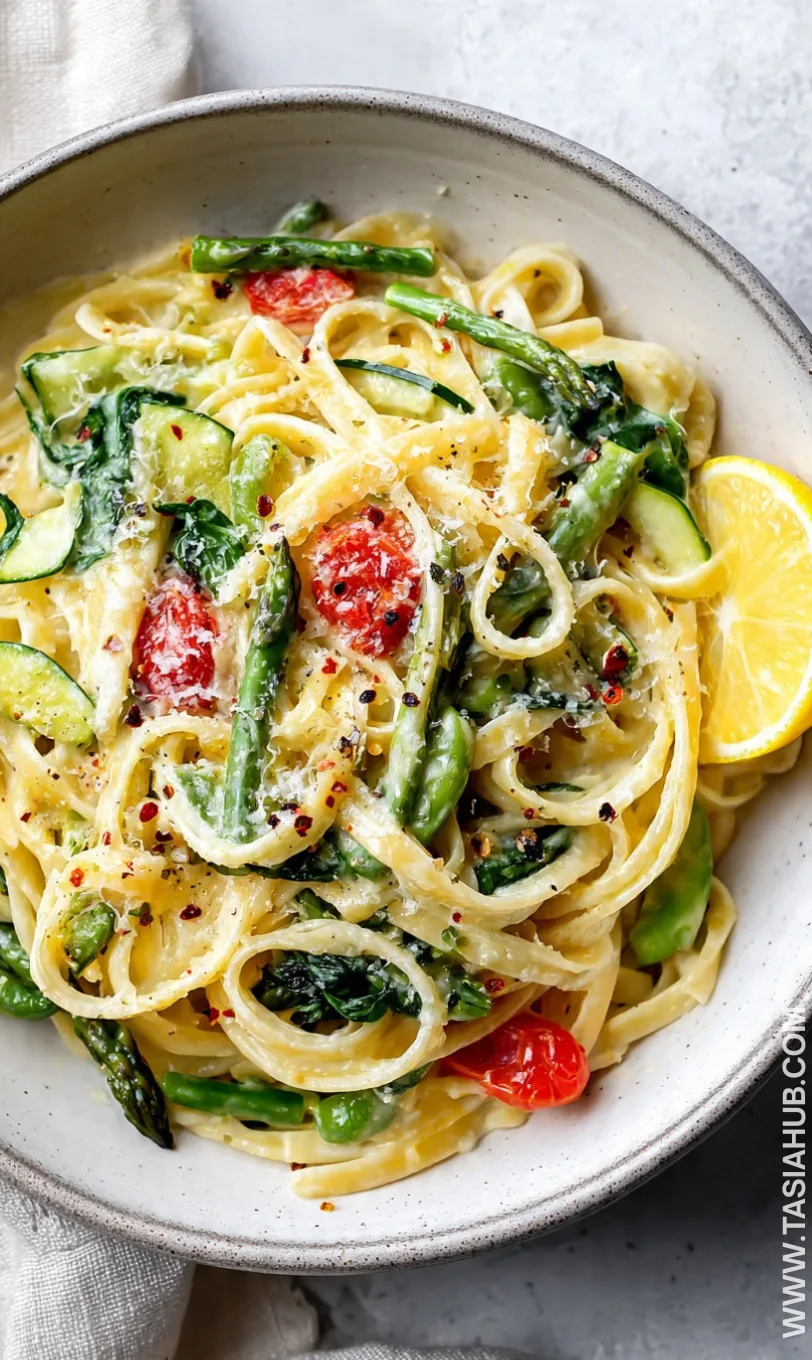
Tips and Tricks for Success
- Prep everything first – Chop all your vegetables before turning on the stove; it keeps the cooking process smooth and stress-free.
- Don’t overcook the pasta – Aim for al dente; it’ll finish cooking slightly when tossed with the sauce.
- Use pasta water wisely – Add a splash if the sauce feels thick; it helps the sauce cling beautifully to the noodles.
- Season gradually – Taste as you go, especially with salt and pepper, to avoid over-seasoning.
- Keep veggies vibrant – Sauté just until crisp-tender so the colors and textures stay fresh and spring-like.
Ingredient Substitutions and Variations
- Pasta swap – Use penne, farfalle, or even whole wheat pasta for a different texture.
- Veggie alternatives – Broccoli, green beans, or bell peppers work well if asparagus or snap peas aren’t available.
- Cream options – Light cream, half-and-half, or even coconut cream for a dairy-free twist.
- Add protein – Grilled chicken, shrimp, or tofu can turn this spring veggie pasta into a heartier meal.
- Cheese variations – Try Pecorino Romano, Asiago, or even a sprinkle of feta for a different flavor profile.
Serving Suggestions
- I love serving this spring veggie pasta with garlic bread and a crisp green salad—it balances the richness perfectly!
- Pair it with a light white wine like Sauvignon Blanc or Pinot Grigio for an easy spring dinner vibe.
- Top with a soft-boiled egg for extra creaminess and a touch of indulgence.
- Sprinkle some toasted pine nuts or slivered almonds on top for crunch and a nutty flavor.
- Serve alongside roasted cherry tomatoes or a lemony side salad to bring even more brightness to the plate.
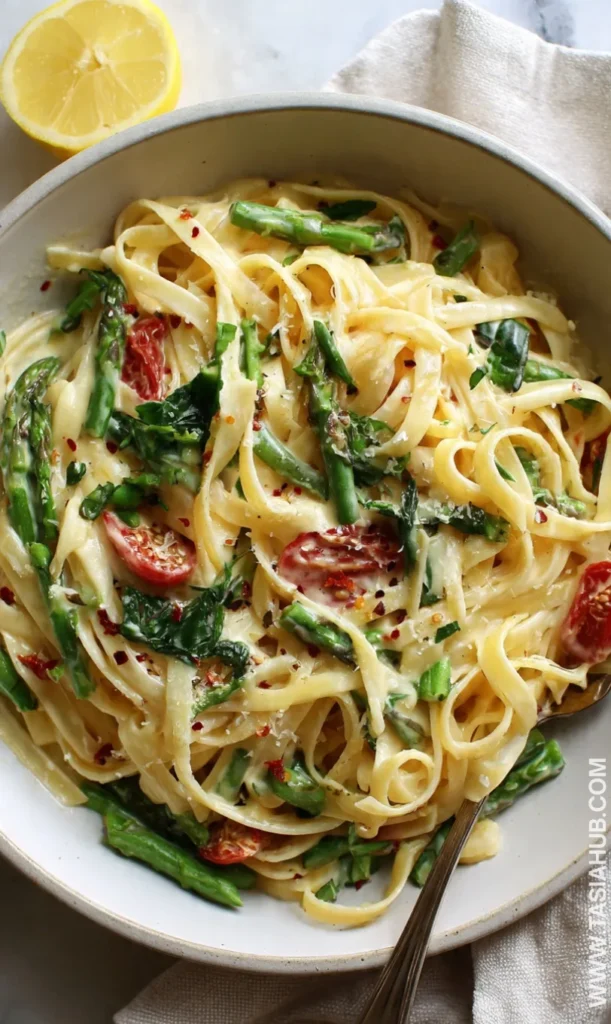
Storage and Reheating Instructions
- Refrigerate – Store leftovers in an airtight container for up to 3 days.
- Reheat on the stove – Gently warm in a skillet over medium-low heat, adding a splash of cream or pasta water to loosen the sauce.
- Microwave – Heat in 30-second intervals, stirring in between to keep the sauce creamy.
- Avoid overcooking – Vegetables can become mushy if reheated too long, so warm just until heated through.
- Freeze (optional) – Pasta with cream sauce is best fresh, but you can freeze in portions without cream, then add it fresh when reheating.
Frequently Asked Questions
Can I make this pasta vegetarian or vegan?
Absolutely! This recipe is naturally vegetarian. For a vegan version, swap the cream with coconut or oat cream and use a plant-based Parmesan alternative.
What vegetables work best in spring?
Asparagus, sugar snap peas, zucchini, baby spinach, and cherry tomatoes are ideal, but you can also add broccoli, bell peppers, or green beans.
Can I use a different type of pasta?
Yes! Fettuccine, spaghetti, penne, or farfalle all work beautifully. Just adjust cooking times according to the package instructions.
How do I keep the sauce creamy without it getting too thick?
Add a splash of reserved pasta water or extra cream while tossing the pasta to keep it silky and smooth.
Can I prep this recipe ahead of time?
You can chop the vegetables and cook the pasta ahead, but it’s best to combine with the sauce right before serving to keep the vegetables fresh and crisp.
Can I add protein to this dish?
Definitely! Grilled chicken, shrimp, or tofu are all great options and make the pasta a heartier meal.
Did you try this spring veggie pasta recipe? Let me know in the comments how it turned out—I’d love to hear your tweaks and favorite vegetable combos!
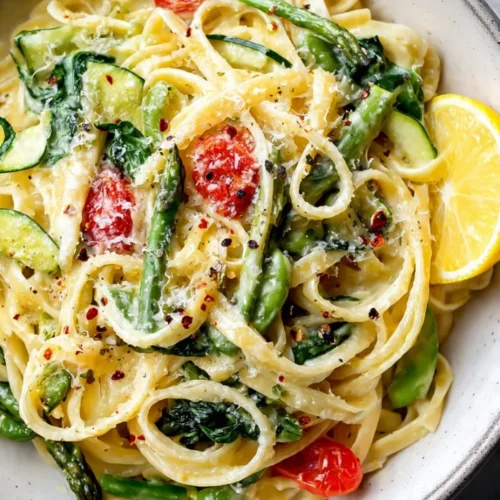
Spring Vegetable Pasta
Equipment
- Large pot
- Large skillet or sauté pan
- Colander
- Wooden Spoon or Silicone Spatula
- Measuring cups and spoons
- Knife and Cutting Board
- Citrus juicer (optional)
Ingredients
For the Pasta:
- 12 oz 340 g fettuccine or spaghetti
- 1 tsp salt for the pasta water
For the Spring Vegetables:
- 1 cup asparagus trimmed and cut into 2-inch pieces
- 1 cup sugar snap peas trimmed
- 1 cup baby spinach
- 1 small zucchini sliced into half-moons
- 1/2 cup cherry tomatoes halved
For the Creamy Sauce:
- 2 tbsp olive oil
- 2 cloves garlic minced
- 1/2 cup heavy cream
- 1/4 cup grated Parmesan cheese
- 1/4 tsp red pepper flakes optional, for a little kick
- Salt and pepper to taste
- Juice of 1/2 lemon
Instructions
Cook the Pasta
- Bring a large pot of salted water to a boil.
- Add the fettuccine or spaghetti and cook according to package instructions until al dente.
- Reserve 1/2 cup of pasta water, then drain the rest.
- Pro Tip: Reserving some pasta water is a game-changer—it helps the sauce cling perfectly to the noodles.
Prepare the Vegetables
- While the pasta cooks, wash and trim the asparagus, sugar snap peas, zucchini, and spinach.
- Slice the zucchini into half-moons and halve the cherry tomatoes.
- Set all the vegetables aside in a bowl for easy access.
- Pro Tip: Keep vegetables roughly the same size so they cook evenly and finish at the same time.
Sauté the Veggies
- Heat 2 tablespoons of olive oil in a large skillet over medium heat.
- Add minced garlic and sauté for 30 seconds until fragrant.
- Toss in the asparagus and snap peas first, cooking for 2–3 minutes until bright and crisp-tender.
- Add zucchini and cherry tomatoes, cooking another 2 minutes.
- Finally, stir in baby spinach and cook until just wilted.
- Pro Tip: Don’t overcook the spinach—it wilts very quickly and keeps the dish light and fresh.
Make the Creamy Sauce
- Reduce heat to low and pour in 1/2 cup of heavy cream.
- Sprinkle in 1/4 cup grated Parmesan cheese and stir until melted and smooth.
- Season with salt, pepper, and red pepper flakes if using.
- Add a squeeze of lemon juice and stir to combine.
- Pro Tip: Whisk continuously to prevent lumps in the cream and create a silky sauce.
Combine Pasta and Vegetables
- Add the drained pasta to the skillet with the sauce and vegetables.
- Toss everything together, adding reserved pasta water a little at a time if the sauce feels too thick.
- Cook for another 1–2 minutes until pasta is fully coated and heated through.
- Pro Tip: Toss gently with tongs to avoid breaking the pasta and keep the vegetables intact.
Serve and Enjoy
- Divide the spring veggie pasta among plates or bowls.
- Sprinkle extra Parmesan over the top if desired.
- Serve immediately, maybe with a crisp green salad or a slice of crusty bread.
Notes
Nutritional Value (Approximate, per serving)
- Calories: 420–450 kcal
- Carbohydrates: 48–52 g
- Protein: 12–14 g
- Fat: 18–20 g
- Fiber: 5–7 g
- Sugar: 6–8 g
- Sodium: Moderate