Pasta Primavera Recipe
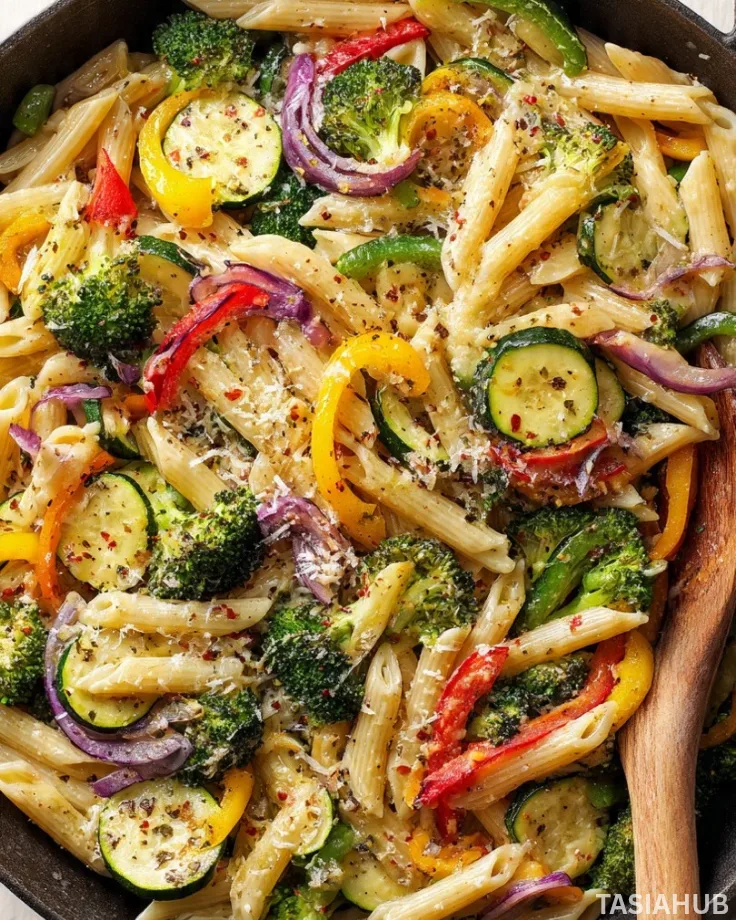
Bright vegetables, tender pasta, and a light, flavorful sauce come together in this classic Pasta Primavera that feels fresh without trying too hard. It’s the kind of dish that looks impressive on the plate but is surprisingly simple to pull together, making it perfect for both busy weeknights and relaxed weekend dinners.
This recipe leans into the beauty of seasonal produce—crisp bell peppers, zucchini, carrots, and broccoli add texture and natural sweetness, while a hint of garlic and olive oil ties everything together. The result is a dish that feels satisfying without being heavy, letting the vegetables shine instead of getting lost in a thick sauce.
I love how versatile Pasta Primavera is. You can use whatever vegetables you have on hand, swap in your favorite pasta shape, or add a sprinkle of Parmesan for extra richness. It’s one of those vegetable pasta meals that adapts easily to your mood and your fridge, which is always a win in my kitchen.
Whether you’re planning easy spring meals or just craving a lighter pasta dinner that still delivers on flavor, this colourful vegetable pasta meal fits right in. It’s fresh, vibrant, and comforting all at once—exactly the kind of dish that makes you want to sit down and enjoy every bite.
Why You’ll Love It
- It’s vibrant and feel-good without being fussy: Every forkful is packed with fresh vegetables and light flavors that feel nourishing, not weighed down by heavy sauces or extra steps.
- Perfect for flexible cooking: This recipe welcomes swaps. Use whatever veggies are in season or already in your fridge, and it still turns out delicious every time.
- Great for everyday dinners or casual entertaining: It looks colorful and inviting on the plate, making it just as suitable for a simple weeknight meal as it is for sharing with friends.
- Light but satisfying: The balance of pasta and vegetables keeps it filling without leaving you overly full, which makes it a go-to when you want something comforting yet fresh.
- A reliable way to eat more vegetables: It’s one of those meals where loading up on veggies feels natural and enjoyable, not like an afterthought.
Ingredient List
For the Pasta
- 12 oz pasta (penne, fettuccine, or spaghetti)
For the Vegetables
- 1 cup broccoli florets
- 1 cup sliced bell peppers (mixed colors)
- 1 cup sliced zucchini
- ½ cup sliced carrots
- ½ cup sliced red onion
For the Sauce & Finishing
- 3 tbsp olive oil
- 3 cloves garlic, minced
- ½ tsp salt (or to taste)
- ¼ tsp black pepper
- ½ tsp Italian seasoning
- ¼ tsp red pepper flakes (optional)
- ½ cup grated Parmesan cheese
- 2 tbsp fresh lemon juice
- Fresh basil or parsley, for garnish
Ingredient Notes
- Pasta: Short pasta like penne or rotini works beautifully because it catches all the garlicky olive oil and bits of vegetables. I usually grab penne—it’s reliable and always delivers.
- Mixed Vegetables: The more color, the better. Using a mix of red, yellow, and green veggies gives the dish that classic Primavera look and keeps every bite interesting.
- Olive Oil: Don’t skimp here. A good-quality extra virgin olive oil adds richness and brings the whole dish together without needing a heavy sauce.
- Garlic: Fresh garlic is key. Jarred garlic just doesn’t give the same depth of flavor in a simple dish like this.
- Lemon Juice: This is the secret finishing touch. Don’t skip it—it brightens everything and makes the vegetables taste even fresher.
- Parmesan Cheese: I always grate mine fresh. It melts better, tastes richer, and makes a noticeable difference in the final dish.
More Recipes >>>>>> Tasty Spaghetti And Meatballs Recipe
Kitchen Equipment Needed
- Large pot – For boiling the pasta until perfectly al dente. I always use my biggest one so the pasta has plenty of room to cook evenly.
- Large skillet or sauté pan – This is where all the vegetables come together. A wide pan works best so everything cooks evenly without steaming.
- Colander – For draining the pasta quickly. I like one with sturdy handles—it makes life easier when you’re working fast.
- Cutting board – For prepping all those colorful veggies. I prefer a large board so I’m not constantly clearing space.
- Sharp knife – Makes chopping vegetables quicker and more enjoyable. A good knife really does make a difference here.
- Wooden spoon or spatula – For stirring the vegetables gently without scratching your pan.
- Measuring cups and spoons – To keep the seasoning balanced without guessing too much.
- Microplane or grater – For fresh Parmesan. I never skip this—freshly grated cheese takes the dish up a notch.
Instructions
1. Cook the Pasta
- Bring a large pot of well-salted water to a rolling boil. The water should taste slightly salty—this is your chance to season the pasta from the inside.
- Add the pasta and cook according to the package directions until al dente. Stir once or twice so it doesn’t stick.
- Before draining, reserve about ½ cup of the pasta water. This helps loosen the sauce later if needed.
- Drain the pasta and set it aside.
Pro tip: Don’t overcook the pasta. Slightly firm pasta holds up better when tossed with the vegetables and sauce.
2. Prep the Vegetables
- While the pasta cooks, wash and slice all the vegetables into similar-sized pieces so they cook evenly.
- Keep harder vegetables like carrots and broccoli slightly thinner than softer ones like zucchini.
Pro tip: Uniform cuts make a big difference—everything cooks at the same pace and looks better on the plate.
3. Sauté the Vegetables
- Heat the olive oil in a large skillet over medium heat.
- Add the red onion and carrots first. Cook for 2–3 minutes until they start to soften.
- Stir in the broccoli and bell peppers, cooking for another 3–4 minutes until tender but still vibrant.
- Add the zucchini last and cook for 1–2 minutes, just until slightly softened.
Pro tip: Avoid overcrowding the pan. If needed, cook in batches to keep the vegetables lightly sautéed instead of steamed.
4. Build the Flavor
- Add the minced garlic, Italian seasoning, salt, black pepper, and red pepper flakes (if using).
- Stir constantly for about 30 seconds, just until the garlic is fragrant.
Pro tip: Garlic burns quickly—keep it moving and lower the heat if needed.
5. Combine Everything
- Add the cooked pasta directly into the skillet with the vegetables.
- Toss gently to combine, making sure the pasta is coated in the olive oil and seasonings.
- Add a splash of the reserved pasta water if the mixture looks dry.
Pro tip: Pasta water helps create a light, silky finish without adding cream or butter.
6. Finish and Serve
- Remove the skillet from the heat and stir in the lemon juice and grated Parmesan.
- Taste and adjust seasoning as needed.
- Garnish with fresh basil or parsley just before serving.
Pro tip: Adding cheese off the heat keeps it smooth and prevents clumping.
More Recipes >>>>>> Tasty Chicken Noodle Soup

Tips and Tricks for Success
- Salt the pasta water generously – This is your main chance to season the pasta itself, and it makes a noticeable difference in the final flavor.
- Cook vegetables in stages – Adding them based on how long they take to cook keeps everything tender and colorful instead of mushy.
- Keep the heat at medium – High heat can burn the garlic and dull the vegetables’ color.
- Reserve pasta water every time – Even if you think you won’t need it, that starchy water is a lifesaver for loosening the dish.
- Finish with fresh elements – Lemon juice and herbs at the end wake up the whole dish and keep it tasting light and fresh.
Ingredient Substitutions and Variations
- Pasta: Use whole wheat, gluten-free, or chickpea pasta depending on your preference.
- Vegetables: Swap in asparagus, snap peas, cherry tomatoes, spinach, or mushrooms—this recipe is very forgiving.
- Cheese: Parmesan can be replaced with Pecorino Romano or a dairy-free alternative if needed.
- Protein add-ins: Grilled chicken, shrimp, or tofu pair beautifully with the vegetables.
- Extra richness: Stir in a small knob of butter or a splash of cream for a slightly richer finish.
- Herbs: Basil and parsley are classic, but thyme or oregano also work well for a different flavor twist.
More Recipes >>>>>> Easy Tomato Ground Beef Pasta Recipe
Serving Suggestions
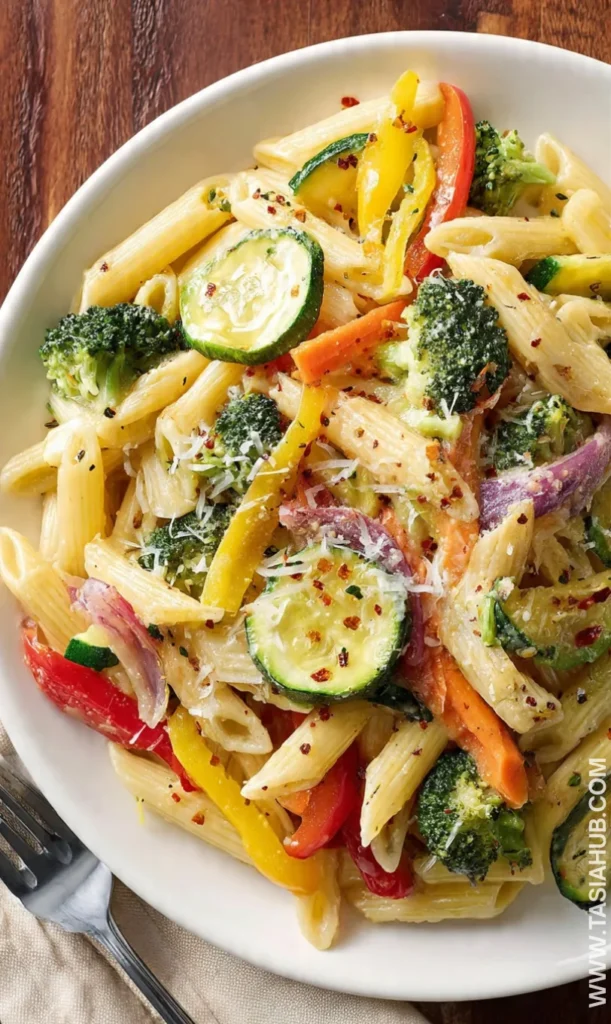
- With garlic bread and a fresh salad – I love serving this pasta with warm garlic bread and a crisp green salad—it balances the richness perfectly and makes the meal feel complete.
- As a light main dish – Serve it on its own with extra Parmesan and fresh herbs for a simple, satisfying dinner.
- Alongside grilled protein – Pair it with grilled chicken, salmon, or shrimp for a heartier meal that still feels fresh.
- Family-style for gatherings – Transfer it to a large serving bowl and let everyone help themselves. The colorful vegetables make it a natural centerpiece.
- As a lunch option – I often pack leftovers for lunch with an extra squeeze of lemon—it tastes just as good the next day.
Storage and Reheating Instructions
- Refrigeration: Store leftovers in an airtight container in the fridge for up to 3 days.
- Reheating on the stovetop: Warm gently over medium-low heat with a splash of water or broth to loosen the pasta.
- Reheating in the microwave: Heat in short intervals, stirring between each one to ensure even warming.
- Avoid overcooking: Reheat just until warmed through to keep the vegetables from becoming too soft.
- Freezing: Not recommended, as the vegetables can lose their texture once thawed.
More Recipes >>>>>> Creamy Cajun Chicken Pasta
Frequently Asked Questions
Can I make Pasta Primavera ahead of time?
Yes, you can prep the vegetables and cook the pasta a day in advance. Store them separately, then quickly sauté and toss everything together just before serving for the best texture.
Is Pasta Primavera traditionally vegetarian?
It is! The classic version focuses on pasta and vegetables, but you can always add protein if you’d like to make it more filling.
What vegetables work best in this recipe?
Fresh, seasonal vegetables are ideal. Broccoli, bell peppers, zucchini, carrots, asparagus, and snap peas all work really well.
Can I make this recipe vegan?
Absolutely. Simply skip the Parmesan or use a plant-based alternative, and make sure your pasta is egg-free.
How do I keep the vegetables from getting soggy?
Cook them in stages and avoid overcrowding the pan. Keeping the heat at medium helps them stay tender with a little bite.
Can I use bottled lemon juice instead of fresh?
Fresh lemon juice is best for flavor, but bottled will work in a pinch. Just use a little less and adjust to taste.
Did you try this Pasta Primavera recipe? Let me know in the comments how it turned out—I’d love to hear how you made it your own!
Pasta Primavera
Equipment
- Large pot
- Large skillet or sauté pan
- Colander
- Cutting board
- Sharp Knife
- Wooden spoon or spatula
- Measuring cups and spoons
- Microplane or grater
Ingredients
For the Pasta
- 12 oz pasta penne, fettuccine, or spaghetti
For the Vegetables
- 1 cup broccoli florets
- 1 cup sliced bell peppers mixed colors
- 1 cup sliced zucchini
- ½ cup sliced carrots
- ½ cup sliced red onion
For the Sauce & Finishing
- 3 tbsp olive oil
- 3 cloves garlic minced
- ½ tsp salt or to taste
- ¼ tsp black pepper
- ½ tsp Italian seasoning
- ¼ tsp red pepper flakes optional
- ½ cup grated Parmesan cheese
- 2 tbsp fresh lemon juice
- Fresh basil or parsley for garnish
Instructions
Cook the Pasta
- Bring a large pot of well-salted water to a rolling boil. The water should taste slightly salty—this is your chance to season the pasta from the inside.
- Add the pasta and cook according to the package directions until al dente. Stir once or twice so it doesn’t stick.
- Before draining, reserve about ½ cup of the pasta water. This helps loosen the sauce later if needed.
- Drain the pasta and set it aside.
- Pro tip: Don’t overcook the pasta. Slightly firm pasta holds up better when tossed with the vegetables and sauce.
Prep the Vegetables
- While the pasta cooks, wash and slice all the vegetables into similar-sized pieces so they cook evenly.
- Keep harder vegetables like carrots and broccoli slightly thinner than softer ones like zucchini.
- Pro tip: Uniform cuts make a big difference—everything cooks at the same pace and looks better on the plate.
Sauté the Vegetables
- Heat the olive oil in a large skillet over medium heat.
- Add the red onion and carrots first. Cook for 2–3 minutes until they start to soften.
- Stir in the broccoli and bell peppers, cooking for another 3–4 minutes until tender but still vibrant.
- Add the zucchini last and cook for 1–2 minutes, just until slightly softened.
- Pro tip: Avoid overcrowding the pan. If needed, cook in batches to keep the vegetables lightly sautéed instead of steamed.
Build the Flavor
- Add the minced garlic, Italian seasoning, salt, black pepper, and red pepper flakes (if using).
- Stir constantly for about 30 seconds, just until the garlic is fragrant.
- Pro tip: Garlic burns quickly—keep it moving and lower the heat if needed.
Combine Everything
- Add the cooked pasta directly into the skillet with the vegetables.
- Toss gently to combine, making sure the pasta is coated in the olive oil and seasonings.
- Add a splash of the reserved pasta water if the mixture looks dry.
- Pro tip: Pasta water helps create a light, silky finish without adding cream or butter.
Finish and Serve
- Remove the skillet from the heat and stir in the lemon juice and grated Parmesan.
- Taste and adjust seasoning as needed.
- Garnish with fresh basil or parsley just before serving.
- Pro tip: Adding cheese off the heat keeps it smooth and prevents clumping.
Notes
Nutritional Value (per serving, approximate):
- Calories: 320 kcal
- Protein: 12 g
- Carbohydrates: 45 g
- Dietary Fiber: 6 g
- Sugars: 6 g
- Fat: 10 g
- Saturated Fat: 2 g
- Sodium: 450 mg
- Vitamin A: 80% DV
- Vitamin C: 90% DV
- Calcium: 20% DV
- Iron: 15% DV