Easter Deviled Eggs
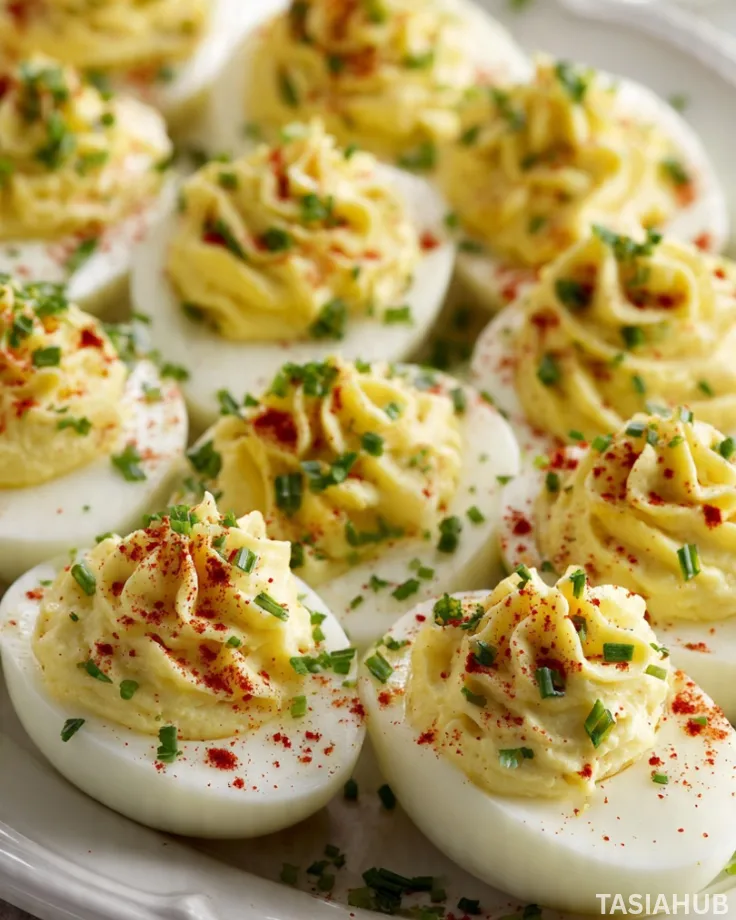
Springtime brings so many fun ways to celebrate, and Easter is the perfect occasion to get creative in the kitchen. One of my favorite traditions is making deviled eggs—simple, colorful, and always a hit on any holiday table. They’re light enough to enjoy before a big meal but flavorful enough to make everyone come back for seconds.
These Easter deviled eggs are more than just a classic recipe—they’re a chance to add a little festive flair to your spread. With pastel-tinted yolk filling and a sprinkle of paprika or chives on top, they instantly bring a cheerful vibe to the table. Plus, they’re quick to make, which means you can spend more time enjoying family and friends instead of stressing in the kitchen.
I love how versatile this recipe is for Easter. You can stick to the classic creamy filling or get creative with mix-ins like a hint of mustard, dill, or even avocado. They’re perfect as Easter appetizers for a brunch, picnic, or even a casual dinner. And because they’re easy to make ahead of time, you can focus on decorating and enjoying the holiday without last-minute cooking chaos.
These deviled eggs are also a fun way to include the kids in your holiday preparations. Let them help with the filling or arranging the eggs on a platter—they’ll feel proud showing off their creations, and you’ll get some extra hands in the kitchen. Whether served as Easter finger food or a centerpiece on your buffet table, these eggs are sure to bring smiles all around.
Why You’ll Love It
- Festive and Fun: These deviled eggs bring a pop of color to your Easter table, making them as Instagram-worthy as they are delicious. The pastel filling adds a cheerful touch that guests will instantly notice.
- Super Quick to Make: From boiling the eggs to assembling the filling, this recipe comes together in under 30 minutes. Perfect for last-minute holiday prep or busy mornings before brunch.
- Kid-Friendly and Interactive: Kids love helping with the filling or adding their own little decorations on top. It’s a fun way to get them involved in cooking without making a mess.
- Versatile Flavor Options: While the classic filling is always a hit, you can easily add herbs, spices, or even a bit of avocado for a twist. Everyone can find a favorite flavor!
- Perfect for Any Easter Occasion: Whether you’re hosting a brunch, a casual family dinner, or a picnic, these deviled eggs work as a charming appetizer or finger food that guests can grab and enjoy.
Ingredient List
For the Eggs:
- 12 large eggs
- 1 teaspoon salt (for boiling water)
For the Filling:
- ½ cup mayonnaise
- 2 teaspoons Dijon mustard
- 1 teaspoon apple cider vinegar
- ½ teaspoon salt
- ¼ teaspoon black pepper
- Paprika, for garnish
- Fresh chives or parsley, for garnish (optional)
Ingredient Notes
- I always use full-fat mayonnaise for the filling—it makes the eggs super creamy and rich.
- Don’t skip the Dijon mustard! It adds just the right tang and depth of flavor.
- Paprika isn’t just for looks—it brings a subtle smokiness that makes the eggs irresistible.
- Fresh herbs like chives or parsley take these from classic to extra festive; I love sprinkling them on top right before serving.
- For perfectly boiled eggs, I like using room temperature eggs and simmering gently—trust me, it makes peeling so much easier.
Kitchen Equipment Needed
- Large pot: For boiling the eggs evenly. I love using a heavy-bottomed one to prevent cracking.
- Slotted spoon: Makes it easy to remove eggs from hot water without burning your fingers.
- Mixing bowl: For combining the yolks and filling ingredients smoothly. I use a medium glass bowl—it’s sturdy and easy to whisk in.
- Fork or whisk: To mash the yolks and mix the filling until creamy.
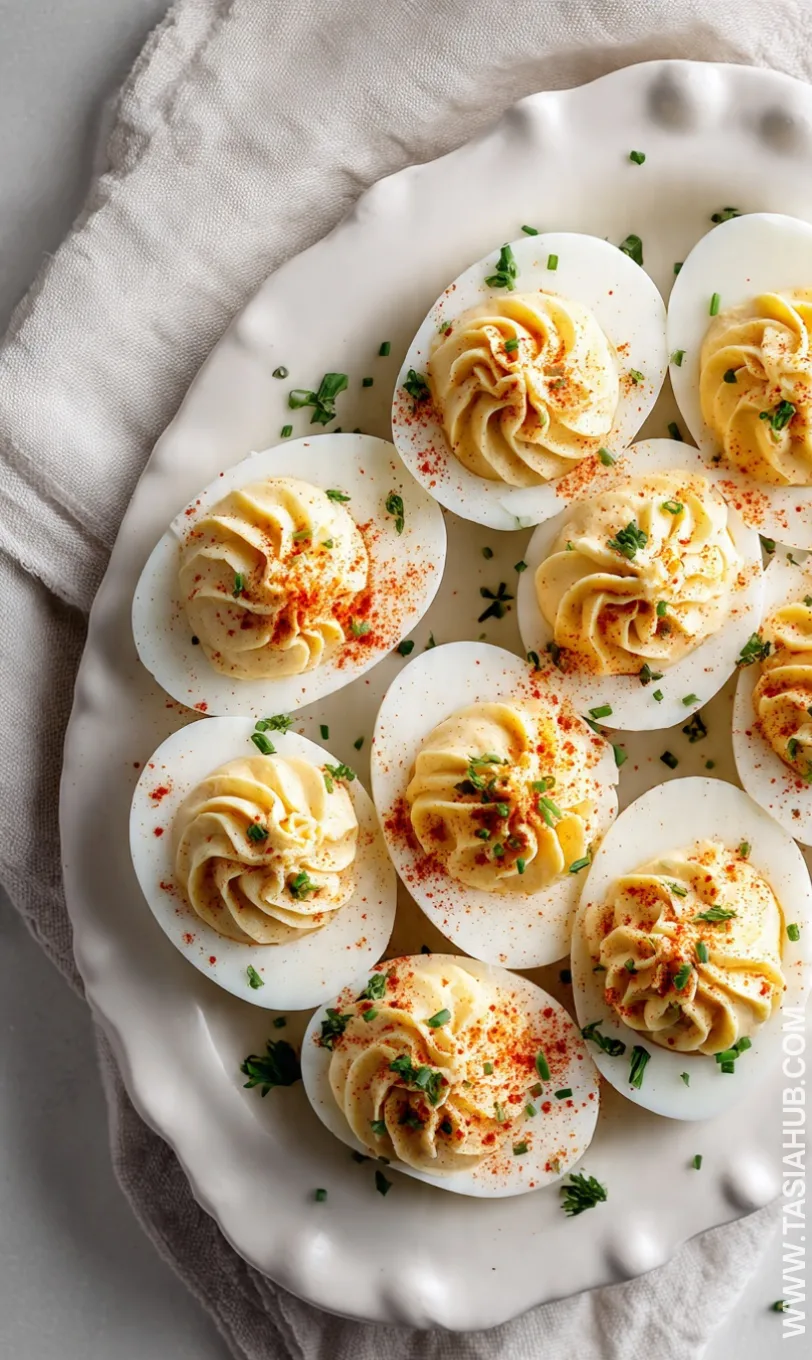
- Piping bag or resealable plastic bag: For neatly filling the egg whites; I prefer a piping bag with a star tip for a pretty finish.
- Serving platter: To display your eggs beautifully. I like using a white platter so the colors pop!
Instructions
Step 1: Boil the Eggs
- Place the 12 eggs in a single layer in a large pot.
- Fill the pot with enough cold water to cover the eggs by about an inch.
- Add 1 teaspoon of salt to the water (this helps prevent cracking).
- Bring the water to a gentle boil over medium heat.
Pro Tip: Once the water reaches a boil, cover the pot and remove it from heat. Let the eggs sit for 12 minutes for fully set yolks—this keeps them creamy without overcooking.
Step 2: Cool and Peel the Eggs
- Carefully transfer the eggs to a bowl of ice water to stop cooking. Let them sit for at least 5 minutes.
- Gently tap each egg on a hard surface, then roll it to loosen the shell.
- Peel the eggs, starting from the wider end where there’s usually an air pocket.
Pro Tip: Peeling under running cold water can help remove stubborn bits of shell more easily.
Step 3: Prepare the Filling
- Slice each egg in half lengthwise and carefully remove the yolks into a mixing bowl.
- Mash the yolks with a fork until they’re crumbly and smooth.
- Add ½ cup mayonnaise, 2 teaspoons Dijon mustard, 1 teaspoon apple cider vinegar, ½ teaspoon salt, and ¼ teaspoon black pepper.
- Mix until the filling is creamy and uniform.
Pro Tip: Whisk continuously to prevent lumps—smooth filling makes piping much easier and prettier.
Step 4: Fill the Egg Whites
- Spoon the yolk mixture into a piping bag or a resealable plastic bag with the tip cut off.
- Pipe the filling neatly into the hollow centers of the egg whites.
- Optionally, sprinkle a pinch of paprika and chopped fresh chives or parsley on top for color and flavor.
Pro Tip: If you don’t have a piping bag, a small spoon works fine—just gently press the filling in to avoid overstuffing.
Step 5: Chill and Serve
- Place the filled eggs on a platter and cover lightly with plastic wrap.
- Refrigerate for at least 30 minutes before serving—this helps the flavors meld together.
- Serve chilled as a festive Easter appetizer or finger food.
Tips and Tricks for Success
- Use room temperature eggs when boiling—they peel more easily than cold eggs straight from the fridge.
- Don’t overcook the eggs; slightly softer yolks make creamier filling.
- Mix the yolk filling thoroughly but gently for a smooth, fluffy texture.
- Pipe the filling for a neat, professional look—spooning works too, just less fancy.
- Chill the eggs before serving; it helps the flavors meld and keeps them firm.
Ingredient Substitutions and Variations
- Mayonnaise: Swap for Greek yogurt or sour cream for a lighter version.
- Dijon mustard: Yellow mustard works in a pinch, but Dijon gives a subtle tang.
- Paprika: Try smoked paprika or cayenne for a little kick.
- Herbs: Dill, parsley, or chives all work beautifully. Mix and match!
- Filling twist: Add avocado, bacon bits, or finely chopped pickles for a creative twist.
- Egg whites: For a fun Easter spin, use natural food coloring in the whites for pastel-hued eggs.
Serving Suggestions
- Serve on a decorative platter with pastel napkins for a festive Easter brunch—it instantly brightens the table!
- I love pairing these deviled eggs with fresh fruit and a light green salad for a balanced appetizer spread.
- Arrange them alongside other Easter finger food like mini quiches or stuffed mushrooms for a fun buffet.
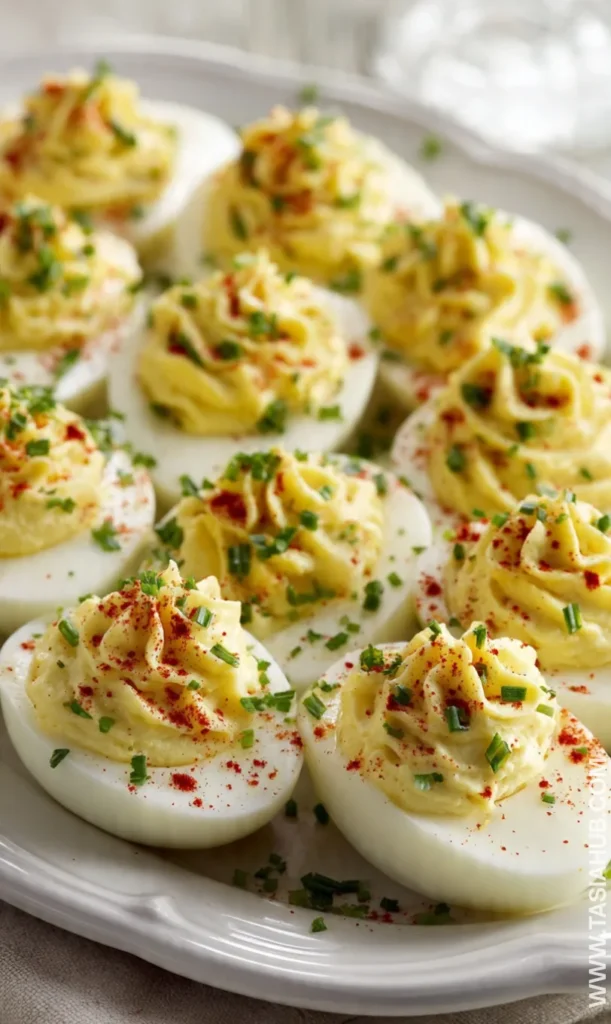
- Top with extra herbs or a small sprinkle of paprika just before serving for a colorful, fresh presentation.
- For a kid-friendly twist, place them in a bunny-shaped or themed serving tray—it makes snack time extra playful and fun!
Storage and Reheating Instructions
- Store the deviled eggs in an airtight container in the refrigerator for up to 2 days.
- Keep the filling and egg whites together; don’t remove until ready to serve.
- Do not freeze—they become watery and lose texture.
- Serve chilled straight from the fridge for best flavor and appearance.
- If making ahead, fill the eggs the night before and keep refrigerated; they taste even better once the flavors meld.
Frequently Asked Questions
How do I make peeling boiled eggs easier?
Use room temperature eggs and an ice water bath after boiling. Gently tap and roll them to loosen the shell—it makes peeling so much simpler.
Can I make deviled eggs ahead of time?
Absolutely! You can boil the eggs and prepare the filling a day in advance. Fill the eggs and keep them refrigerated until serving for the freshest flavor.
What can I use instead of mayonnaise?
Greek yogurt or sour cream works well for a lighter filling. It changes the flavor slightly but keeps the creamy texture.
How long can deviled eggs stay out at a party?
They’re best eaten within 2 hours if left at room temperature. Keep extras in the fridge to ensure food safety.
Can I color the eggs for Easter?
Yes! You can use natural food coloring or dye the egg whites before filling to create pastel-themed Easter eggs.
Any tips for fancy presentation?
Try using a piping bag with a star tip for a professional look and garnish with herbs or a dash of paprika for color.
Did you try this recipe? Let me know in the comments how it turned out! I’d love to hear your favorite variations and any fun ways you serve them for Easter.
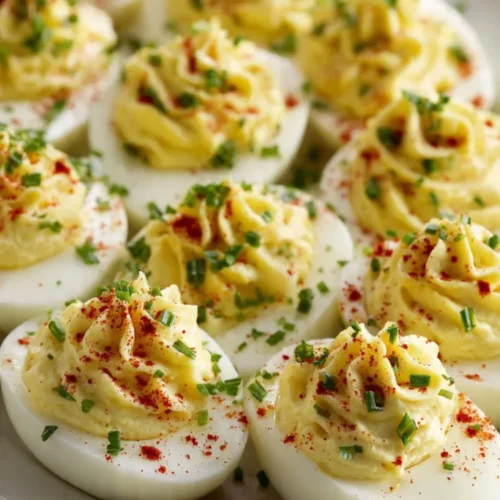
Easter Deviled Eggs
Equipment
- Large pot
- Slotted spoon
- Mixing Bowl
- Fork or whisk
- Piping bag or resealable plastic bag
- Serving Platter
Ingredients
For the Eggs:
- 12 large eggs
- 1 teaspoon salt for boiling water
For the Filling:
- ½ cup mayonnaise
- 2 teaspoons Dijon mustard
- 1 teaspoon apple cider vinegar
- ½ teaspoon salt
- ¼ teaspoon black pepper
- Paprika for garnish
- Fresh chives or parsley for garnish (optional)
Instructions
Step 1: Boil the Eggs
- Place the 12 eggs in a single layer in a large pot.
- Fill the pot with enough cold water to cover the eggs by about an inch.
- Add 1 teaspoon of salt to the water (this helps prevent cracking).
- Bring the water to a gentle boil over medium heat.
- Pro Tip: Once the water reaches a boil, cover the pot and remove it from heat. Let the eggs sit for 12 minutes for fully set yolks—this keeps them creamy without overcooking.
Step 2: Cool and Peel the Eggs
- Carefully transfer the eggs to a bowl of ice water to stop cooking. Let them sit for at least 5 minutes.
- Gently tap each egg on a hard surface, then roll it to loosen the shell.
- Peel the eggs, starting from the wider end where there’s usually an air pocket.
- Pro Tip: Peeling under running cold water can help remove stubborn bits of shell more easily.
Step 3: Prepare the Filling
- Slice each egg in half lengthwise and carefully remove the yolks into a mixing bowl.
- Mash the yolks with a fork until they’re crumbly and smooth.
- Add ½ cup mayonnaise, 2 teaspoons Dijon mustard, 1 teaspoon apple cider vinegar, ½ teaspoon salt, and ¼ teaspoon black pepper.
- Mix until the filling is creamy and uniform.
- Pro Tip: Whisk continuously to prevent lumps—smooth filling makes piping much easier and prettier.
Step 4: Fill the Egg Whites
- Spoon the yolk mixture into a piping bag or a resealable plastic bag with the tip cut off.
- Pipe the filling neatly into the hollow centers of the egg whites.
- Optionally, sprinkle a pinch of paprika and chopped fresh chives or parsley on top for color and flavor.
- Pro Tip: If you don’t have a piping bag, a small spoon works fine—just gently press the filling in to avoid overstuffing.
Step 5: Chill and Serve
- Place the filled eggs on a platter and cover lightly with plastic wrap.
- Refrigerate for at least 30 minutes before serving—this helps the flavors meld together.
- Serve chilled as a festive Easter appetizer or finger food.
Notes
Nutritional Value (per serving – approx. 2 deviled egg halves):
- Calories: 140–160 kcal
- Protein: 6 g
- Fat: 11 g
- Carbohydrates: 1–2 g
- Cholesterol: 185 mg
- Sodium: 180 mg
- Sugar: <1 g